Boston MA Small Multifamily Investing Insights
Boston’s small multifamily market can look intimidating at first glance. Prices are high, inventory moves quickly, and older buildings come with more moving parts than a standard condo or single-family home. Still, if you want a property that can combine rental income, long-term appreciation, and possible owner-occupant benefits, a two-family or three-family home in Boston deserves a serious look. Let’s dive in.
Boston has a housing stock that naturally supports this strategy. According to the City of Boston, nearly 40% of the city’s housing is in 2-4 unit structures, and about 43% is in buildings with 5 or more units.
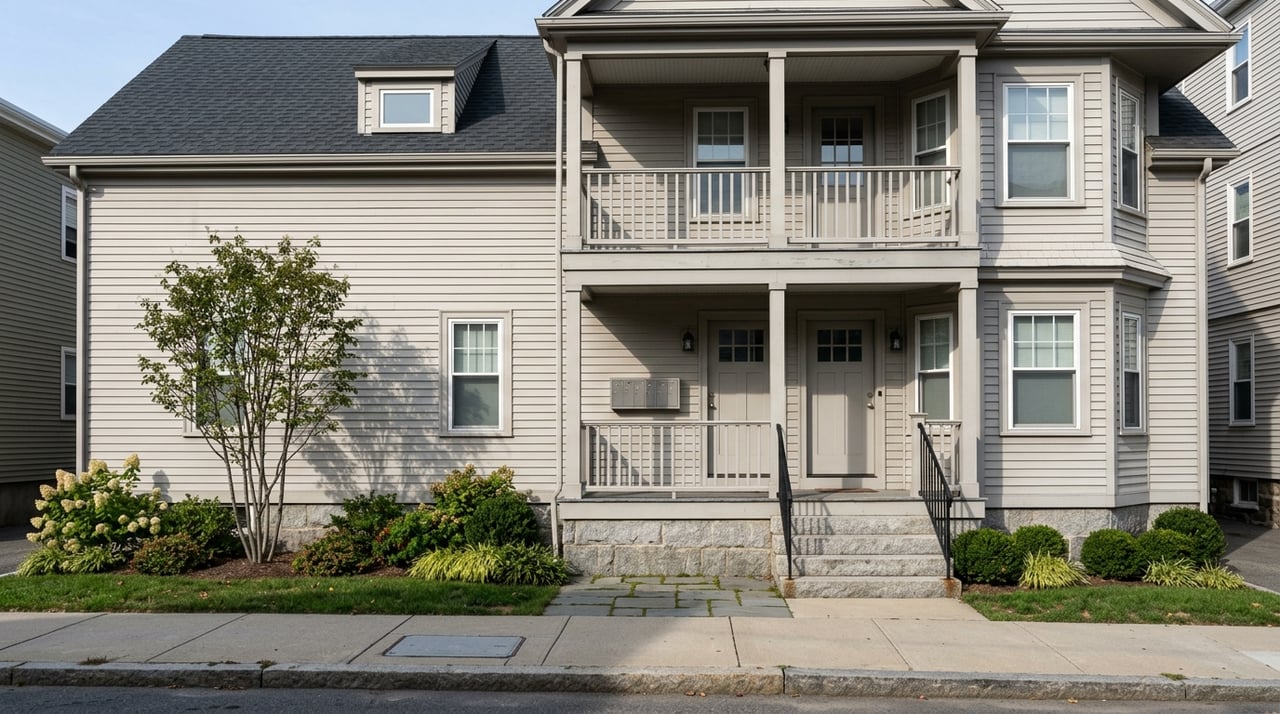
That matters because small multifamily is not a niche idea here. In Boston, the classic example is the triple-decker, a three-unit wood-frame building that has historically worked well for owner-occupants and investors alike. In practical terms, most buyers looking at this asset class are focusing on two-family and three-family properties, not large apartment buildings.
If you are investing for income, unit layout matters just as much as location. Boston’s fair housing assessment shows that more than a third of the city’s housing units are 2-bedroom units, another 23% are 1-bedroom units, and 76% of rental housing has 2 bedrooms or fewer, according to the City of Boston Assessment of Fair Housing.
That data points to a clear takeaway. In many Boston submarkets, 1-bedroom and 2-bedroom apartments, along with some 3-bedroom layouts, are often the most relevant rent-producing product in a small building. If you are comparing properties, the value is not only in the number of units but also in whether the unit mix lines up with local demand.
Boston rents remain high by almost any measure. Zillow’s March 2026 market snapshot places the average rent in Boston at $3,500, with studios at $2,300, 1-bedrooms at $2,680, 2-bedrooms at $3,400, and 3-bedrooms at $3,900.
Those numbers are powerful, but they should not be used blindly. The same Zillow data shows nearby markets vary widely, with Cambridge averaging $3,600, Brookline $4,350, Somerville $3,700, Chelsea $2,700, Everett $2,600, and Revere $2,650. If you are underwriting a Boston multifamily purchase, you need to compare that property against its immediate submarket and nearby alternatives, not just a citywide average.
For another benchmark, HUD fair market rents for the Boston-Cambridge-Quincy area are $2,941 for a 2-bedroom, $3,526 for a 3-bedroom, and $3,894 for a 4-bedroom in FY2026. These figures are often used in voucher and assisted-housing underwriting and can help you sanity-check rent assumptions.
Strong rents matter, but vacancy is just as important in a two-family or three-family building. The Boston Foundation’s 2023 housing report says homeowner vacancy stayed below 1% and rental vacancy continued to decline in 2022. Boston’s own landlord program materials also describe the market as highly competitive with extremely low vacancy.
This is good news for investors, but it also raises the stakes. In a larger apartment building, one vacancy may be manageable. In a two-unit or three-unit property, one empty apartment means a much larger share of your income disappears at once.
That is why small multifamily investing in Boston often rewards careful, long-term ownership more than quick-turn speculation. With high home values, strong rents, and tight vacancies, many owners depend on a combination of rent growth, mortgage paydown, and appreciation over time.
Boston is not a bargain market. Zillow’s Boston-Cambridge-Newton home value data shows a home value around $713,764 as of February 28, 2026, with homes going pending in about 20 days.
That tells you two things. First, entry costs are high. Second, demand remains active enough that well-positioned properties can still move quickly.
For many buyers, that means your strategy should be patience, not perfection. The right small multifamily purchase in Boston may not produce outsized short-term cash flow on day one, but it can still make sense if the building is well-located, the unit mix is rentable, and the long-term ownership plan is realistic.
If you plan to live in one unit and rent the others, Boston offers meaningful advantages. The city’s residential exemption saved qualified homeowners up to $4,353.74 on FY2026 taxes.
Boston also says eligible first-time buyers may qualify for a 5% grant plus closing costs through its homebuying support resources, and down payment assistance of up to $30,000 can be used to purchase a 2-, 3-, or 4-family primary residence. For buyers trying to break into an expensive market, this can materially change the numbers.
There is also a newer pathway through the city’s co-purchasing housing pilot program. The program offers 0% deferred loans of up to $50,000 for households up to 100% AMI and up to $35,000 for households up to 135% AMI, and it is specifically aimed at Boston two-family and three-family homes.
Boston small multifamily investing is not just about rent collection. It is also about compliance, building condition, and understanding where your backup plans may be limited.
For example, Massachusetts law states that no city or town may enact or enforce rent control, subject to narrow statutory exceptions, as outlined by the Massachusetts Legislature. That gives investors one important piece of statewide policy clarity.
At the same time, Boston’s housing stock is older, and that creates added due diligence. The Massachusetts lead law guidance says lead hazards must be removed or controlled in homes built before 1978 when children under 6 live there, and landlords and sellers must disclose lead risks.
In practical terms, lead compliance should be a routine line item in your review of any older two-family or three-family property. You do not want this to be an afterthought after closing.
Some buyers think they can offset risk by using a vacant unit as a short-term rental. In Boston, that is not a universal fallback option.
The city’s short-term rental rules require registration and limit owner-adjacent whole-unit rentals to owner-occupied two-family and three-family buildings. If your investment plan depends on short-term rental income, you need to confirm the property and your occupancy plan fit the rules before you buy.
This is one reason Boston small multifamily works best when you underwrite conservatively. Long-term rental performance should carry the deal, with any alternative use treated as secondary, not essential.
When you evaluate a building, focus on the basics that most directly affect performance:
A Boston multifamily purchase asks you to weigh housing stock, rent levels, submarket differences, tax benefits, and local rules all at once. That is especially true if you are looking at owner-occupying one unit, analyzing a rent roll, or comparing a Boston building with options in nearby communities.
This is where strong local guidance can save you time and money. A careful advisor can help you compare real numbers, pressure-test assumptions, and avoid buying a building that looks good on paper but creates unnecessary risk in practice.
If you are thinking about buying or selling a small multifamily property in Greater Boston, Diane Basemera can help you evaluate the opportunity with clear local insight and a practical, investor-minded approach.
Stay up to date on the latest real estate trends.


What does this mean for you? I will sit and listen to your needs and yet be mindful of your wants and dreams. Contact me Today!