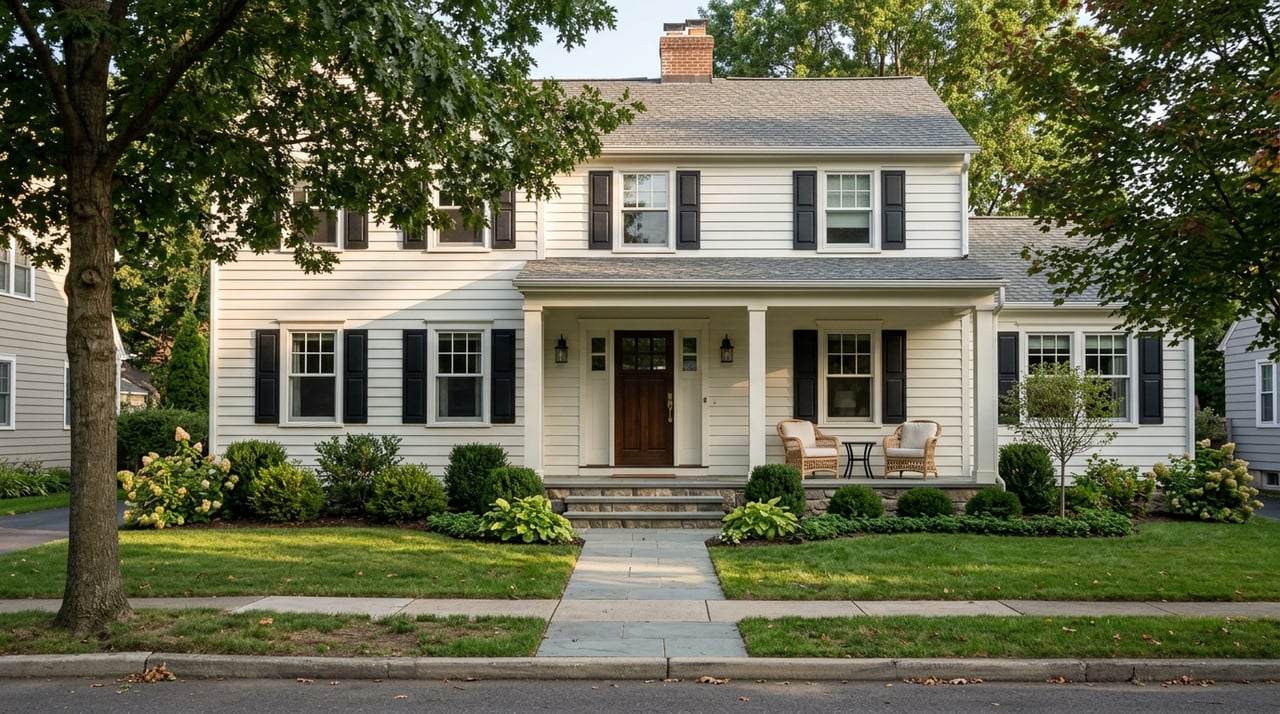
Newton MA Villages Lifestyle and Your Home Search
Wondering why one part of Newton feels like a lively village center while another feels quiet and tucked away? That question matters more than many buyers expect. When you understand how Newton’s 13 villages are structured, you can narrow your search faster, focus on the right daily lifestyle, and avoid touring homes that do not match how you actually want to live. Let’s dive in.
Newton is about seven miles west of downtown Boston, but it does not function like a city with one central downtown. Instead, the city is organized around 13 distinct villages, each with its own commercial core, housing pattern, and street rhythm.
That village structure is not just local lore. Newton’s own planning materials classify different areas as village centers, neighborhood centers, convenience centers, a gateway center, and larger retail or service clusters. In practical terms, that means your day-to-day experience can change a lot depending on where you land.
For buyers, this is useful because the village label often hints at lifestyle. Areas with more storefronts and stronger transit access tend to feel more walkable and mixed-use, while smaller commercial nodes usually feel more residential and quieter.
A home search in Newton works best when you start with lifestyle before square footage. Two homes with similar price points can feel completely different depending on whether they sit near a major village center, a smaller neighborhood node, or a quieter residential interior street.
If you want to grab coffee, run errands, and reach transit without relying on your car as much, you may want to prioritize the villages with larger commercial centers. If you picture calmer streets and a more low-key setting, you may want to focus on villages with smaller centers and more residential surroundings.
This matters in a high-cost market. Census QuickFacts reports a median value of owner-occupied housing units in Newton of $1,264,900 for 2020 to 2024, with median monthly owner costs of $4,000 or more for homes with a mortgage. When prices are this significant, it helps to be sure the setting fits your routine as well as the house itself.
Some Newton villages offer the closest thing to a traditional town center. These are often the places buyers start when they want a stronger sense of activity, more storefronts, and easier access to everyday destinations.
Newton Centre is one of Newton’s main village centers and one of the most shopping and dining-oriented parts of the city. Its history as a railroad suburb still shows up in how people use it today, with a classic village-center feel that appeals to buyers who want errands and restaurants close by.
If you want a home search centered on walkability, Newton Centre is often a natural first stop. It tends to match buyers who want a lively core without giving up Newton’s broader suburban setting.
West Newton blends a village feel with commuter convenience. Historically, it served as a local business center and was valued for its proximity to Boston, more rural setting, and small-town social feel.
Today, that mix still helps explain its appeal. Buyers often look here when they want a recognizable village center but do not necessarily need the busiest environment in the city.
Newtonville grew around rail access and a central high school, which helped shape it as a traditional rail suburb. It still reads more like a residential village with a compact commercial strip than a major downtown.
That can be a good fit if you want a village identity and commuter connection but prefer something that feels a bit more contained. It often strikes a balance between convenience and neighborhood feel.
Newton Corner is Newton’s gateway center, and its transportation history is a big reason it feels different from many other villages. With its position on the route to Boston, rail history, Turnpike influence, and several bus routes, it has a denser and more transportation-oriented feel.
If your priority is access and movement, Newton Corner may stand out. It tends to appeal to buyers who are comfortable with a more active setting and want strong connections to surrounding areas.
Not every buyer wants to live near a busy village center. Newton also has villages and subareas that feel more residential, lower-key, and centered on daily routines rather than a full retail district.
Waban developed as a commuter suburb after rail service expanded, and the city now classifies it as a convenience center. That suggests a smaller-scale commercial presence focused more on daily needs than on a large destination district.
For buyers, Waban often aligns with a quieter pace. If you want some nearby essentials but a more residential day-to-day feel, it may deserve a close look.
Newton Highlands also grew with improved commuter access and is now classified as a neighborhood center. That usually points to a smaller commercial node with more homes nearby and a lighter retail mix than the larger village centers.
This can be a helpful middle ground. You may get some local activity and transit access while still feeling more residential than the biggest centers in Newton.
Auburndale began as a suburban commuter village and later became associated with the Charles River and recreation. The city classifies it as a neighborhood center, which supports its reputation as a quieter residential setting with some local services.
If your search is more about home environment than being near a busy village square, Auburndale may fit well. It often appeals to buyers who want a calmer backdrop to everyday life.
Upper Falls and Oak Hill can also fit buyers looking for a more residential rhythm. Based on the city’s planning categories, these areas generally align more with neighborhood-scale or convenience-focused living than with a major village-center experience.
That does not mean they lack appeal. It simply means your experience may be shaped more by residential streets and everyday routines than by a concentrated commercial district.
One reason Newton can feel both suburban and urban is its transit map. The MBTA Green Line D branch serves Riverside, Woodland, Waban, Eliot, Newton Highlands, Newton Centre, and Chestnut Hill, while commuter rail serves Auburndale, West Newton, and Newtonville. Newton Corner is also served by several bus routes, including multiple express routes.
For buyers, that creates a practical sorting tool. If a car-light commute matters, you will likely focus first on Green Line villages, commuter rail villages, or Newton Corner. If your priority is a quieter street, you may decide to trade some transit convenience for a more residential interior location.
This is where local search strategy matters. A home that looks ideal on paper can feel very different depending on whether it sits steps from a station, near a village center, or farther inside a residential section of the same village.
Newton’s housing stock helps explain why village centers and village interiors can feel so different. The city’s housing analysis says the majority of its housing stock consists of one-unit structures, and 69.4 percent of occupied housing units are owner-occupied.
That means even in villages with lively commercial areas, many nearby blocks still feel predominantly residential. You may be only a short distance from shops or transit while still living on a street lined mainly with one-unit homes.
Property type also affects how buyers enter the market. According to Newton’s FY2026 assessing FAQ, median assessed values are $1,503,500 for single-family homes, $1,213,950 for two-families, $1,365,900 for three-families, and $813,500 for condominiums.
Assessed values are not the same as market prices, but they offer a useful framework. In general, condos may provide a lower entry point, while single-family homes sit at the higher end of the local range.
Newton is not standing still. The city says it is fully compliant with the MBTA Communities Law as of March 2025, and its Village Center Overlay District allows by-right housing and commercial opportunities near transit, amenities, and gathering spaces.
For buyers, that means some station-area and village-center locations may continue to evolve. If you are drawn to walkability, transit access, or housing near village amenities, it is worth thinking not only about what a location feels like today, but also how it may change over time.
This does not mean every village will change in the same way. It does mean that village-center and transit-oriented areas are likely to stay important parts of Newton’s housing story.
The most effective Newton home search usually starts with a simple question: how do you want your day to feel? Once you answer that, the village map becomes much easier to use.
You might focus on Newton Centre, West Newton, Newtonville, or Newton Corner if you want more activity, stronger transit connections, and a more downtown-like setting. You might lean toward Waban, Newton Highlands, Auburndale, or quieter parts of Upper Falls and Oak Hill if you want a more residential pace.
In a market as nuanced and competitive as Newton, that kind of clarity can save time and reduce stress. It also helps you compare homes based on how they support your real life, not just their finishes or bedroom count.
If you want help matching your budget, commute, and lifestyle to the right part of Newton, Diane Basemera can guide you through the village-by-village differences and help you search with confidence.
Stay up to date on the latest real estate trends.
What does this mean for you? I will sit and listen to your needs and yet be mindful of your wants and dreams. Contact me Today!